Talking Points
-
SAVE COYOTE CREEK – PUBLIC COMMENT QUICK GUIDE
Why We Oppose the Coyote Creek Agrivoltaic Ranch Project
Massive Loss of Native Trees
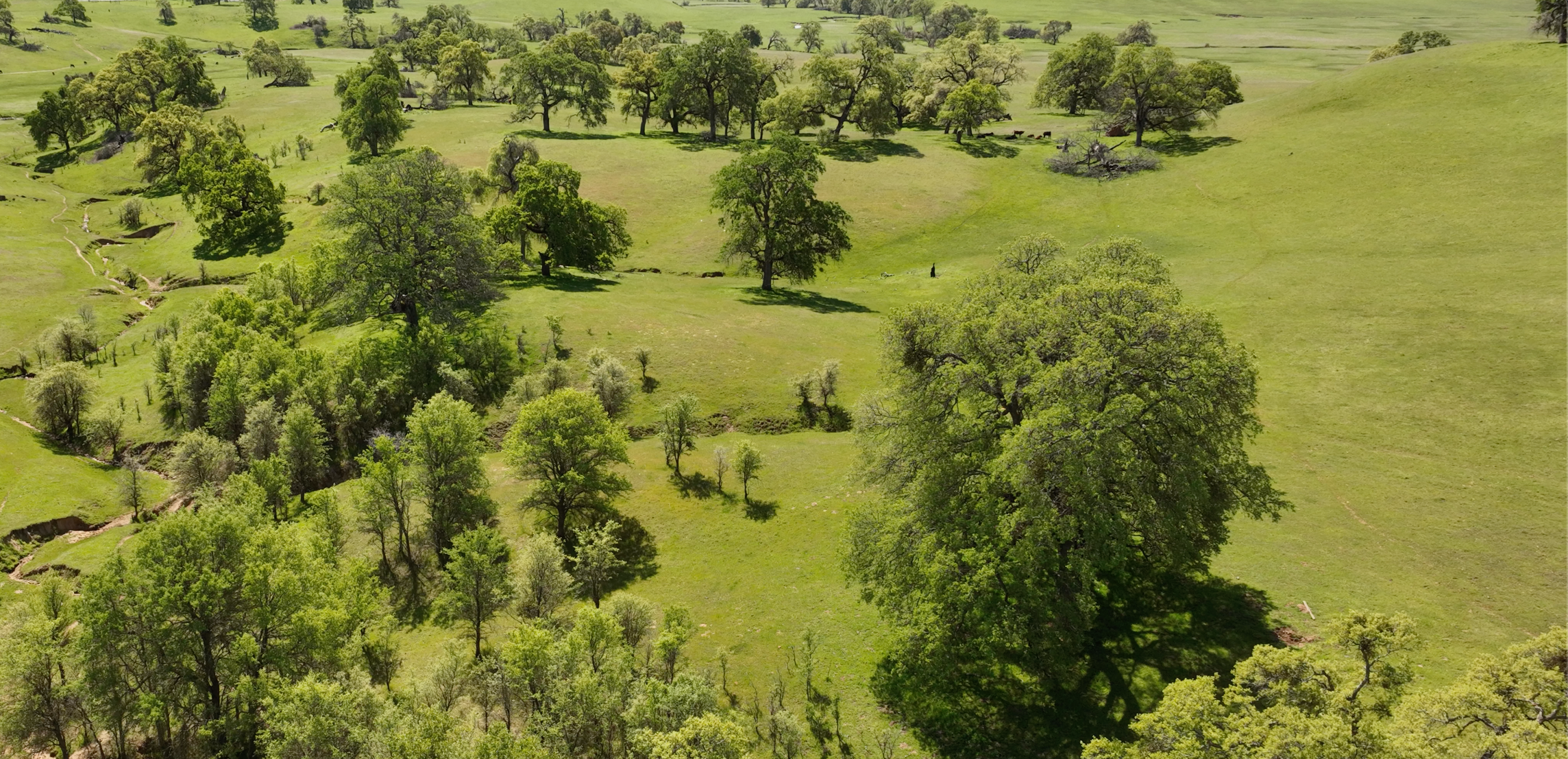
Over 4,000 native trees will be destroyed.
More than 3,500 are mature native oaks.
Over 1,700 are legacy oaks (16"+ DBH), considered old-growth.
Numerous trees are massive and ancient—up to 67 inches in diameter.
These trees are irreplaceable in our lifetimes, and some have been around since Shakespeare.
Destruction of Critical Habitat
Nearly 1,400 acres of native habitat will be lost:
Blue oak woodland
Blue oak savannah
Native grassland
Vernal pools
Habitat for dozens of listed and sensitive species will be destroyed or fragmented.
The project threatens 25% of known occurrences of certain rare native plants.
Replacement Trees Cannot Replace What Will Be Lost
Blue oaks take 90 years to produce acorns.
New plantings will only be maintained for 7 years, making long-term survival unlikely.
Wildlife Corridors at Risk
Fenced solar arrays will fragment the landscape, cutting off wildlife movement between:
Deer Creek Hills Nature Preserve
Prairie City SVRA
Adjacent mitigation lands
Fragmentation harms species survival and ecosystem function.
The solar facility will block the increasingly important west to east corridor for species seeking cooler climes at higher altitude.
Planning Failures & Missteps
More appropriate alternative sites were not seriously considered.
SMUD signed the Power Purchase Agreement without visiting the site or conducting the standard pre-screening they would do for one of their inhouse projects.
This project represents a failure of environmental due diligence.
We Support Solar — But Not Here
Renewable energy is essential.
But solar must be placed on disturbed lands, rooftops, parking lots, and low-value habitat —
NOT on pristine oak woodlands and vernal pools.
Our Coalition’s Commitment
A broad coalition of environmental groups, scientists, and residents is united in opposition.
We are prepared to fight to preserve this irreplaceable landscape.
We urge the Board to protect Sacramento County’s natural heritage.
What We Were Asking of the Board of Supervisors
Vote NO on the Coyote Creek Agrivoltaic Ranch project.
Require the developer and SMUD to pursue lower-impact alternative sites.
Safeguard the ecological integrity of Coyote Creek for future generations.
Closing Message for Speakers
“This project destroys irreplaceable habitat. Please reject it and help us protect the oak woodlands, grasslands, and vernal pools that make Sacramento County unique.” here
-
· The project would develop 1,554 acres of blue oak woodland, blue oak savannah, and associated grasslands fragmenting the 2,704-acre property.
· The preserved 1,150 acres would be so fragmented by the solar development that they would be of little habitat value and would be narrower than the minimum width recommended by CDFW for connectivity corridors.
· The heat islands created by the solar development may adversely impact remaining tree on the preserved land.
· Impacts to hydrology may impact both on site and down slope vernal pool complexes. An independent hydrology report was entirely disregarded in the FEIR.
· The development would result in the loss of 3493 trees in the reduced footprint project outlined in the preface to the final EIR, the vast majority of these are mature blue oaks.
· The arborists report was not updated to reflect the reduced footprint, but includes 4787 total trees including 3 buckeye, 6 cottonwood, 4695 oaks (combined), 4553 blue oaks, 79 valley oak, 23 unidentified oak species (dead/very poor health), 40 interior live oak, 1 willow, 5 elderberry, 67 unknown sp. (dead), 1 maple (non-native), and 3 fruit trees (non-native).
· There are 1,762 heritage trees in the arborists report slated for removal, nearly 200 of these are three feet in diameter at breast height (DBH) or larger.
· The champion blue oak identified by the Gathering Growth Foundation is 46.5 inches in diameter at breast height. There are 38 trees larger than this proposed for removal. The largest blue oak proposed for removal is 67 inches across, and coiuld be in the 850 years old range.
· While trees on private lands throughout California are not well documented, this property may contain many of the largest blue oaks remaining in the county, and in California as a whole.
· While not as old as this blue oak, the project would remove other massive trees including an 81-inch cottonwood, and a 75-inch valley oak.
· The project would impact 25% of the occurrences of western spiked rosinweed (Calycadenia spicata,1B.3) listed in the California Natural Diversity Database (CNDDB). The mitigation would include the salvage and redistribution of topsoil, although timing and methods of salvage and storage are not included in the mitigation measure. Requirements for mitigation and monitoring reporting are not included in the FEIR although the development of a mitigation and monitoring plan will be required.
· The agricultural management plan is also not included in the FEIR and is necessary to ensure that onsite grazing will not adversely impact the western spiked rosinweed.
· The project will also impact valley brodiaea, although the level of anticipated impacts or mitigation measures for this species are not included in the FEIR.
· The project is not compliant with public facilities elements PF-69 and PF-78 of the Sacramento County General Plan regarding the Placement of energy production and large-scale renewable energy facilities.
· The project is not compliant with conservation elements CO-139 through CO-141 of the Sacramento County General Plan regarding the mitigation of native tree species and oaks. Typically these elements would require the replanting of one tree seedling for each inch of trunk diameter removed (the arborists report includes 79,126.40 inches) as opposed to one seedling for each tree removed as proposed in the FEIR.
-
OHV access for daily / casual use at the SVRA
230-kilovolt (kV) gen-tie line: 1.3 miles long, to run parallel to the boundaryof Prairie City SVRA
A portion of gen-tie line to be located within border of Prairie City SVRA
OHV riders will be displaced, create a higher concentration of recreationists riding in other OHV areas, thus inflict harm directly on the OHV recreation community
Impacts to competitions and events hosted at Prairie City
Impacts to ongoing OHV recreation, as well as powersports events including Hangtown Motocross Classic, NorCal Rock Racing Ultra4 Stampede
Impacts to specific areas or features within the SVRA
Obstruction of the natural viewshed from solar facility infrastructure
Eradication of oak woodlands throughout the solar facility project area
Blasting and leveling of foothills across the solar facility project area
Dust-related conflicts between the SVRA and solar facility
Competing access to scarce water sources between the SVRA and solarfacility
Impacts to camping access at Prairie City
Impacts to disability-supportive camping and recreational access at Prairie City
Impacts to other recreational uses at Prairie City
Impacts to species of concern
Failure to meaningfully involve OHV users and concerned stakeholders throughout 4+ years of project planning
Developers failed to hold a public hearing with OHMVR Commission (required by CA PRC Section 5090.24)
Poor site selection / deliberate exclusion of more appropriate alternate sites from project analysis
Negative impacts to local economy resulting from decreased use at Prairie City SVRA
Inconsistency between environmental analysis of this project and previously proposed SVRA expansions
Cultural resource / tribal concerns
Prairie City’s Economic Benefits Outweigh the solar project
385 Jobs
$59 million ANNUAL total economic impact - $9 million local
Over 100,000 visitors a year
A Dangerous Precedent
Siting next to a State Park
Additional industrial developments bordering other CA State Park SVRAs
and open OHV riding areas are currently in active planning
Brown fields adjacent to other State Parks may be targeted for industrial
developments
Degraded value, or elimination, of opportunities for everyone to access
outdoor recreation and nature’s respite in CA’s treasured state parks
-
The recent Sacramento County Board of Supervisors’ unanimous approval of the Coyote Creek Solar Project shifts the focus to the Sacramento Municipal Utility District (SMUD). The utility signed the Power Purchase Agreement (PPA) back in 2021 before fully reviewing the environmental sensitivity of the site, including the project’s significant impacts to oak woodlands, wildlife corridors and tribal resources.
SMUD should not purchase power from a project that is so clearly poorly sited and environmentally damaging. As Sacramento residents and SMUD customers, we have strongly opposed this project, and we do not want our energy to come at the expense of the environment. We must now increase public pressure on SMUD leadership to push for responsible renewable energy procurement. We must demonstrate to SMUD that the Coyote Creek PPA is not in compliance with SMUD’s own policies.
See our Power Purchase Agreement Talking Points and Presentation Slides
SMUD holds regular Board of Directors meetings as well as a series of committee meetings, all of which are open to the public. Members of the community may provide public comment at any board or committee meeting, even when the topic they wish to speak about is not listed on that meeting’s agenda. SMUD is required to post agendas for regular board meetings at least 72 hours in advance, and agendas for special meetings at least 24 hours in advance. All meeting schedules, agendas and
materials are available at:
https://www.smud.org/Corporate/About-us/Company-Information/Board-Meetings.
Regular Board meetings occur on the third Thursday of the month, except that the regular meeting in December occurs on the second Thursday of the month. Unless otherwise designated on the Board meeting agenda, regular meetings begin at 6:00 p.m.
Attending a SMUD Board Meeting
Meetings are held at SMUD Headquarters, 6201 S Street, Sacramento. Free visitor parking is available in the main lot, and additional free street parking is on S Street or nearby side streets. Attendees should plan to arrive a bit early to check in, find seating and complete a speaker slip. Visitors are required to provide a valid form of identification to the security personnel before entering the building. Acceptable forms of ID include:
A state-issued REAL ID–compliant driver’s license
A U.S. passport
A certified true copy of a birth certificate
SMUD also has an identification policy for non-US citizens or foreign nationals, and it is available at: https://www.smud.org/Corporate/About-us/Company-Information/Visitor-policy. After verifying identification, security staff will check in visitors and direct them to the meeting room.
Providing Public Comment
To offer comments in person, visitors fill out a speaker slip at the sign-in table when they arrive and submit it to the clerk. When their name is called during the public comment period, they will have the opportunity to speak, typically up to three minutes per person. If virtual participation is available for a particular meeting, instructions are always included in the posted agenda. You can speak during the general public comment period even if the Coyote Creek Solar Project is not on the agenda. When offering remarks, speakers are encouraged to state their name clearly and whether they are a SMUD customer before addressing the Project issues. Keep in mind that if a particular topic or project is on the agenda, comments on that issue are typically restricted to that time on the agenda.
Talking Points
Community members can emphasize that while we strongly support renewable energy, Coyote Creek is ill-sited for an industrial-scale solar development. The project would result in severe and irreversible ecological damage, including the destruction of nearly 3,500 rare blue oaks, the loss of vernal pools and seasonal wetlands and the elimination of habitat for numerous imperiled species. The project also requires the use of heavy explosives to flatten the rolling hills, generating over one million cubic yards of rock and soil, permanently altering the natural landscape.
Speakers may wish to highlight that Sacramento County has disturbed or low-value land far more suitable for solar. Building this project on ecologically intact habitat is unnecessary and inconsistent with smart renewable energy planning.
It is also important to note that SMUD signed the PPA before fully reviewing the environmental impacts. Sacramento residents have repeatedly demonstrated their opposition to this project and made clear that they do not want their clean energy goals met at the expense of local biodiversity, community values, or the region’s cultural heritage. SMUD should not purchase power from a project that causes this level of damage, nor should SMUD participate in a PPA that directly opposes SMUD’s Strategic Direction (SD). Specifically, SD-7 states that SMUD will “[c]onduct its business affairs and operations in a sustainable manner by continuously improving pollution prevention, minimizing environmental impacts, including Tribal and other cultural impacts, conserving resources, enhancing regional biodiversity and promoting equity within SMUD’s diverse communities.”
For those preparing comments, reviewing the project’s Environmental Impact Report (EIR) and the comment letters submitted by environmental organizations, Tribal governments, and community groups can be extremely helpful in shaping your comments. These documents provide detailed analyses of the project’s impacts and explain why the site is inappropriate for solar development.
The EIR and public comments are available at:
https://planning.saccounty.gov/Pages/Coyote-Creek-Agrivoltaic-Ranch.aspx
Speakers can use these materials to support their arguments, cite scientific or technical concerns, and reinforce the message that SMUD should lead with responsible clean energy planning by not purchasing power from a project that would cause substantial environmental harm.
Additional Opportunities to Engage
Members of the public can speak directly to SMUD board members not only through public comment but also by emailing board@smud.org. Messages explaining why Coyote Creek is important to you and why responsible renewable energy matters, can make outreach more meaningful.
-
-
Coming soon!